
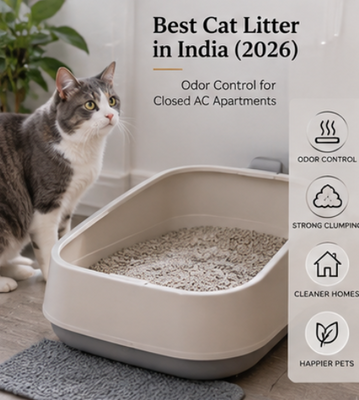
In Indian apartments where windows remain closed for air conditioning throughout the hot summer, odour from cat litter trays can build up quickly. Lower-grade non-clumping litter may become saturated and require frequent full-tray replacements, increasing both mess and monthly costs.
This guide compares popular bentonite clay and plant-based tofu litters sold by major Indian pet retailers. The key factors are dust levels, clump firmness, tracking, disposal, and odour control in warm, enclosed homes.
Top Picks at a Glance
- Best clumping performance: Whisker Wonder Activated Carbon Bentonite, approximately ₹799 for 10 kg
- Best low-dust plant-based option: PetSutra Natural Tofu Cat Litter, approximately ₹699 for 6 litres
Prices, pack sizes, and product formulations can change. Check the current label and seller listing before buying.
1. Whisker Wonder Activated Carbon Bentonite: Best Clumping Performance
- Type: Sodium bentonite with activated charcoal granules
- Typical price: Approximately ₹799 for 10 kg
- Claimed clump speed: Under five seconds
Performance: Activated carbon is included to adsorb odour-causing compounds rather than relying only on heavy fragrance. Fast, firm clumps are easier to remove without breaking apart, helping the unused litter stay cleaner for longer.
Best for: Single- or multi-cat households prioritising strong clumping, odour control, and lower cost per kilogram.
Watch for: Fine clay litter can release dust while pouring and may track beyond the tray. Pour slowly and close to the base of the box, then use a litter mat near the exit.
2. PetSutra Natural Tofu Cat Litter: Best Low-Dust Plant-Based Pick
- Type: Plant-based soybean and pea fibre
- Typical price: Approximately ₹699 for 6 litres
- Special feature: Water-soluble pellets marketed as flushable
Performance: Tofu pellets generally create far less airborne dust than fine clay and tend to track less because the larger pieces fall away from paws more easily. This can make them a practical option for enclosed apartments and cats that appear bothered by dusty litter.
Best for: Homes prioritising low dust, lighter bags, reduced tracking, and plant-based materials.
Important disposal note: “Flushable” does not mean suitable for every toilet, pipe, septic system, or local wastewater rule. If flushing is permitted where you live, dispose of only a small clump at a time and never flush dried faeces. When uncertain, seal used litter in a waste bag instead.
Bentonite vs. Tofu Cat Litter
| Metric | Bentonite clay | Plant-based tofu |
|---|---|---|
| Odour control | Excellent when activated carbon or zeolite is included | Good natural absorbency; performance varies by formula |
| Dust production | Low to high, depending on quality | Usually very low |
| Disposal | Place in household waste; never flush | Household waste, or small flushable clumps only when plumbing and local rules allow |
| Estimated monthly cost for one cat | ₹400–₹550 | ₹700–₹900 |
| Tracking | Moderate to high because fine grains stick to paws | Usually low because larger pellets fall back into the tray |
| Bag weight | Heavy | Light |
Monthly cost estimates depend on tray size, litter depth, scooping frequency, the cat’s habits, and local pricing.
How to Manage a Litter Tray in an Indian Summer
Maintain a 7–8 cm litter depth
Around 7–8 cm, or roughly three inches, gives urine enough material to form a complete clump before reaching the plastic base. Shallow litter can create sticky residue that is harder to scoop and clean.
Scoop at least twice daily
Remove urine clumps and solid waste in the morning and evening. Multi-cat homes may need more frequent scooping. Top up the tray after cleaning so the depth stays consistent.
Choose odour control, not overpowering perfume
Strong fragrance can mask odour temporarily, but some cats dislike heavily scented litter. For enclosed rooms, look for activated carbon or zeolite and prioritise frequent scooping over added perfume.
Use the right number of trays
A common starting point is one tray per cat, plus one extra, placed in separate accessible locations. This also reduces how quickly any single box becomes saturated.
Wash and dry the tray regularly
Follow the litter maker’s replacement guidance. When changing the litter, wash the empty tray with mild, unscented soap and dry it completely before refilling. Avoid ammonia-based cleaners, which can smell similar to urine.
Improve ventilation safely
Keep the tray away from food and water, and use an exhaust fan or air purifier if available. Do not place a covered litter box in an unventilated cupboard, as trapped humidity and odour can make cats avoid it.
Which Cat Litter Should You Choose?
Choose activated-carbon bentonite if firm clumps, strong odour control, and lower running costs matter most. Choose tofu litter if low dust, lighter weight, and reduced tracking are your priorities.
Whichever material you use, consistent scooping has a bigger impact than fragrance alone. Introduce any new litter gradually by mixing it with the old litter over several days, and watch whether your cat continues to use the tray comfortably.