
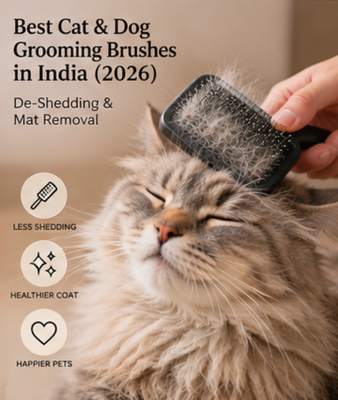
Seasonal temperature shifts and high humidity can make shedding especially noticeable across India. Double-coated dogs such as Golden Retrievers, Labradors, and German Shepherds, along with long-haired cats such as Persians and Himalayans, can release large amounts of loose undercoat.
Without regular grooming, dead hair may trap moisture close to the skin and contribute to tangles, matting, irritation, and hot spots. A standard pin comb often skims only the topcoat. For dense or long coats, you need a grooming tool that reaches loose undercoat without scratching delicate skin.
Summary of the Best Grooming Tools
- Best for long-hair de-shedding: FURminator Undercoat DeShedding Tool (Large/Long Hair), approximately ₹1,899
- Best self-cleaning slicker brush: Hertzko or Goofy Tails Retractable Slicker Brush, approximately ₹499–₹899
- Best for short-haired breeds: KONG ZoomGroom Rubber Brush, approximately ₹699
Prices vary by seller and may change over time.
Detailed Grooming Tool Reviews
1. Hertzko or Goofy Tails Self-Cleaning Slicker Brush
How it works: Fine, angled stainless-steel pins move through the coat to lift loose fur and help release minor tangles. Choose a model with rounded or protected pin tips, especially for pets with sensitive skin.
Key feature: A one-click button retracts the pins, allowing collected fur to slide off quickly into the bin.
Why it stands out: One of the biggest barriers to regular grooming is pulling hair out from between tightly packed brush pins. A self-cleaning mechanism makes cleanup much faster and encourages more consistent brushing. The fine bent pins are useful for dense coats, light tangles, and everyday maintenance.
Best for: Persian and Himalayan cats, Golden Retrievers, German Shepherds, and other medium- to long-coated pets.
2. FURminator Undercoat DeShedding Tool: The Heavy-Duty Choice
How it works: A stainless-steel de-shedding edge reaches through the topcoat to collect loose undercoat hair. The built-in FURejector button helps release the collected fur from the tool.
Why it may be worth the price: For heavy shedders such as Labradors and Golden Retrievers, an undercoat de-shedding tool can remove significantly more loose hair than a standard comb. FURminator states that its tool can reduce loose hair from shedding by up to 90% when used as directed.
Usage rule: Use it for only 10–15 minutes, about once a week. Work on a dry, mat-free coat and never apply heavy downward pressure. Let the tool glide over the coat, and stop if your pet shows discomfort or the skin becomes irritated.
Best for: Healthy, double-coated dogs and cats that shed heavily. Do not use it over wounds, irritated skin, or tightly matted fur.
3. KONG ZoomGroom Rubber Brush: Best for Short Coats
How it works: Flexible rubber fingers massage the skin and gather loose surface hair without sharp metal teeth.
Why it stands out: Short-haired dogs still shed heavily, but they often do not need an aggressive undercoat blade. A rubber curry brush is gentle, easy to clean, and useful during both dry grooming and bath time. It can also help distribute natural oils through the coat.
Best for: Labradors, Beagles, Indian Pariah dogs, and other short-coated breeds.
Grooming Frequency by Coat Type
| Coat category | Example breeds | Recommended tool | Suggested frequency |
|---|---|---|---|
| Short-coat dogs | Labradors, Beagles, Indies | Rubber curry brush such as KONG ZoomGroom | Twice per week |
| Dense double coats | Golden Retrievers, German Shepherds, Huskies | Undercoat de-shedder plus slicker brush | Three times per week; daily light brushing during peak shedding |
| Long-coat cats | Persians, Himalayans, Maine Coons | Fine bent-pin slicker brush | Daily for 5–10 minutes |
| Short-coat cats | Domestic Shorthairs, Indie cats | Rubber grooming glove or gentle slicker brush | Once or twice per week |
How to Brush Safely in Hot and Humid Weather
- Brush in a cool, well-lit area so you can inspect the skin as you work.
- Start with short sessions and reward calm behaviour.
- Brush in the direction of hair growth, using light pressure.
- Never pull through a tight mat. Severe matting should be handled by a professional groomer or veterinarian.
- Clean and dry grooming tools after use, particularly during humid weather.
- Check for redness, sores, parasites, or fungal-looking patches. Stop grooming and consult a veterinarian if you notice persistent irritation or hair loss.
Which Grooming Brush Should You Buy?
Choose according to coat type rather than price alone. A self-cleaning slicker brush is the most versatile everyday option for long-haired cats and medium- to long-coated dogs. A dedicated undercoat de-shedding tool is better for healthy double-coated pets during heavy shedding periods. For short-haired breeds, a rubber curry brush is usually the gentlest and easiest choice.
The best brush is the one you can use safely and consistently. Regular five-minute sessions are generally more comfortable for your pet, and more effective at controlling loose fur, than occasional aggressive grooming.